Signed in as:
filler@godaddy.com
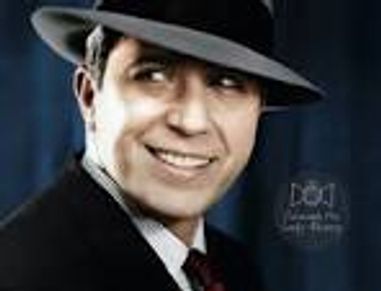
Carlos Gardel, (1890 – 1935) a superstar of Tango song - a singer, songwriter, composer, and actor he is the most beloved and prominent figure in Tango’s history. Gardel was notable for his baritone
voice, expressive and dramatic phrasing of lyrics. He starred in the first music videos, in films and was an innovator.
In collaboration with the lyricist, Alfredo Le Pera he created some of the most recognizable tangos. Many of the films featuring Carlos Gardel were filmed in New York City, including "El Dia Que Me Quieras," which included a cameo by a young Astor Piazzolla.

Astor Piazzolla, (1921- 1992) Argentine born, and New York raised composer, arranger and bandoneon player who went on to revolutionize Tango, creating the Nuevo Tango (new tango) by combining
traditional tango with elements of Jazz and Classical music. (Shown here next to his violinist, Fernando Suarez-Paz)
Born in Mar del Plata and immigrated to New York City in 1925, Astor began to study bandoneon in New York. He met and worked with Carlos Gardel, studied composition with Nadia Boulanger and his connection and deep understanding of Tango, Jazz and Classical music propelled the creation of nuevo tango. He was a mentor and friend to Leonardo Suarez-Paz, whose father was Piazzolla's violinist for over a decade. In the class, we danced to Piazzolla's Orquesta del '46.
Aníbal Troilo (1914 – 1975), also known as Pichuco is once of the most beloved figures of the tango culture. He was a bandoneon player, composer, arranger, and bandleader whose orchestra enjoyed great popularity during tango's Golden Age of 1940s and 50s.
Considered one of the pillars of the tango tradition, Troilo's style continued to evolve with time and inspired generations of younger musicians including violinist Fernando Suarez-Paz who played with Troilo. Astor Piazzolla played in and arranged for Troilo's orquesta típica during the period of 1939–1944, before forming his first orchestra Piazzolla '46.
Alfredo Gobbi (1912 – 1965) was a violin player, composer and bandleader in Argentina during the Golden Age of Tango whose nickname was 'the romantic violin of tango" / "el Violín Romántico del Tango," carrying a refined and expressive Decarean (from Julio DeCaro) style. He joined a sexted led by violinist Elvino Vardaro and Osvaldo Pugliese along with Anibal Troilo and played as the first violinist of Pedro Laurenz.
He formed his own orchestra in 1942, with a style which became known for its marcación bordoneada (a type of left hand comping), artistically beautiful, authentically pure and unmistakably his.
Horacio Salgán, (1916 - 2016), was an Afro-Argentine pianist, leader and composer. He is known for his rhythmically and harmonically sophisticated style and impeccable and energetic musical performances along with his orchestra and other groups such as the Quinteto Real. His influences include Jazz, Brazilian music, folk music, and all kinds of beats that drew his attention as well as the great names of classical music. His most important compositions include “Del 1 al 5 (Días de pago)” (1944), " Don Agustin Bardi" (1947), “Entre tango y tango” (1953), “La llamo silbando” and "A Fuego Lento" - a composition with highest popular acclaim. Leonardo Suarez-Paz had the pleasure of performing as a violin soloist with Salgán's orchestra, which has influenced his own style as a composer and "A Fuego Lento," forms part of many of our programs.

The capital city of Argentina, known as the birthplace of Tango, along with the Rio De La Plata region. The city’s residents are known as Porteños or people of the port.
A social dance gathering where people dance tango and all its rhythms (tango, milonga, vals criollo and sometimes even candombe). Milonga also refers to a specific rhythm which was a precursor of the tango.
A jargon that emerged in Buenos Aires in the late 19th century which includes a mix of Italian, Spanish and other dialects used by the immigrants and is characterized by syllable reversal (example: TAN-GO = GO-TÁN). It was commonly used to be able to communicate without being understood by the authorities and became the language of tango. Many lunfardo words are in use today in standard Argentine Spanish.
A set of tangos, milongas or valses (usually 3 songs of the same orchestra or style) grouped together and played in a row during a milonga. They are spaced apart by a 'cortina,' a short clip of music of any type that signals the end of one 'tanda' and the beginning of the next. You can begin dancing during any part of the tanda' but uou are usually expected to finish the entire 'tanda' with whomever you started dancing it with.
Literally meaning 'pencil,' it refers to the drawing of a circle with your foot on the floor. It is similar but definitely not the same as the 'rond de jambe' in ballet!
A fundamental figure of tango in which the follower draws a figure '8.' It combines either a forward step (for forward ochos) or a back step (for back ochos) with a pivot.
A dynamic and ornamental movement where the free leg of the follower is launched by the leader (either forward or backward), through disassociation and change of direction, creating an effect of a whip in circular motion. The boleos can stay on the floor or be higher in the air and are led with the torso (not the arms).
Coming from the verb 'barrer,' meaning to sweep, this steps is a sweep of either the followers or the leaders foot and leg across the floor by the partner.
Coming from the verb 'parar' meaning to stop, this step is a stop or an interruption of a step.
A step where the follower's foot is placed in between the feet of the leader or where the leader's foot is placed in between the feet of the follower, making a 'sandwich-like' position.